
10
2012
What is an Object Database?
 An article by
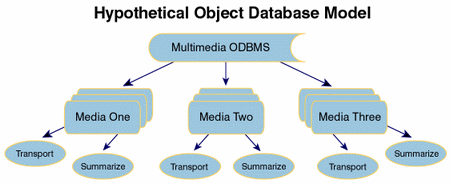
Object database may also be referred to as an object-oriented database where the data is presented as an object, much like the ones used in an object-oriented program. Object database management systems or ODBMS are created by combining the capabilities of a database with the capabilities of an object programming language. The function of an ODBMS is to make the objects in a database look like objects for programming language in other object programming languages. The function of an ODBMS is to stretch the programming language using persistent data, recovering data, and a lot more.
Why Use Object Database?
Java, C#, Python are some examples of object-oriented programming languages that work well with object-oriented databases. Other object-oriented databases have their own programming languages aside from those mentioned above. The ODBMS uses the same model as the ones found in a programming language that is object-oriented. Those companies that are looking for a high performance for processing their data should think about using object database to store their records. In short, object database is the best type of database to use when in need of a database that can answer three factors – the needs of the business, complex data and optimum performance.
Brief History of Object Database
The ODBMS came out of a research during 1970, and in the year 1985, the term “object-oriented database system” first came out. There are numerous products that appeared in the market such as Gemstone, Vbase and Gbase. Other products such as the ObjectStore, Jasmine, O2, VOSS, and Verdant Object Database can still be found until now and have since been combined with recent open source programs. The idea of persistence was also included into other object-oriented programming languages by the object database management systems. Some of the programming languages such as Gemstone, VOSS, Vbase and Gbase were incorporated into other programming languages, but during the 90s, C++ was the most popular programming language to be used before Java was later introduced. In 2004, object database grew with the emergence of object databases that are open sourced. These recent object databases were more affordable and easier to use than their predecessors and this is due to their use of OOP language.
Using Object Database
Object databases became in demand within certain areas in applications used for telecommunications, engineering and the like. Not only that, they are also used in other scientific applications as well. Though they are not that popular in the market, object databases have made their mark in some areas for services with regards to finances.
Some object database provides its users with a query language of their own. This function allows the user to access records using declarative programming. The differences between object databases products lie within the integration of query language, the interface and the query language itself. The schema of the object database product is also another source of comparison.
When comparing ODBMS to other products, it will only show that ODBMS is far more effective than the others in specific tasks. This is due to the navigational interfaces which are used by the ODBMS with its operations unlike some who are using declarative interfaces.
Further readings


Advertisements
Recent Posts
- Undresser.it.com Delivers Consistent Image Quality for AI Visuals
- Profitez des meilleurs jeux sur Nova Jackpot avec paiements rapides et sécurisés jouer au casino en ligne
- Mobiles Glücksspiel: Casino-Spiele und Wetten jederzeit unterwegs
- How to Discover Legitimate Casino Sites Not Registered with GamStop
- Why UK Players Opt for Non GamStop Casinos for Adaptable Gaming Options
- Why British gamblers opt for Non GamStop gaming sites for unrestricted gaming access
- Stone Vegas Online Casino: Umfangreiche Slot-Spiele und Live Dealer Games
- Come identificare i portali di betting non AAMS affidabili e sicuri online
- Come operano i sistemi di sicurezza informatica nei casino non aams
- Why United Kingdom Players Select Non GamStop Casinos for Gaming Flexibility
Random Posts
- What is Enterprise Information Integration
- Leading Non-GamStop Casinos for UK Players Seeking Alternatives
- What is Database Integration?
- Die führenden deutschen Online Casinos mit zügiger Auszahlung und ausgewogener Spielauswahl
- What is a Relational Database?
- Why British players prefer Slots Not on GamStop for gambling flexibility
- Pin Up Platformas?n?n T?hlili – Pin Up-da Qeydiyyat v? Giri? – Tiltin ?lk Q?rm?z? Bayra??
- What are Database Models?
- What is Database Normalization?
- Free Database Software Options